The idea costs nothing. Production costs everything.
Why watch projects must be managed in a targeted manner – and how you can ensure that your project remains plannable, brand-compliant, and scalable.

A custom watch as a brand statement, a customer loyalty tool, or a premium product – that is a powerful idea. Powerful enough that it regularly finds its way into strategy meetings, budget rounds, and board presentations. What is seldom considered there: a watch is not a product that you order like a piece of printed matter. Between the first sketch and the deliverable serial product lies a path that demands sound industry know-how, precise control, and realistic time planning. Anyone who underestimates this path risks quality losses, scheduling problems, and costs that simply do not appear in the original business case. Those who walk this path with the right support not only gain a product – but a solid basis for a brand decision that pays off and is sustainable in the long run.
What really occupies decision-makers
Watch projects rarely fail due to a lack of budget or bad ideas. They fail at points that are invisible at the beginning.
- Timeline vs. Reality: Internal timelines are often too optimistic – typical iteration loops between concept, sample, and series are missing from the original plan.
- Supply chain without backing: Suppliers, proofs, documentation: if you don't know the chain, you have no control – and in case of doubt, no ability to deliver.
- Quality in the sample ≠ Quality in the series: A perfect first sample says little about repeatability. Scaling is the actual quality problem.
- Brand protection underestimated: Counterfeits, unauthorized copies, lack of IP protection: in the premium segment, this point can quickly cause strategic damage.
- After-sales forgotten: Whoever delivers must also be able to service. Service capability is not an afterthought – it begins with the product decision.
- Small decisions, big effects: Material, complexity, variants, suppliers: early decisions determine later costs, timing, and brand impact.
What leaders need to know about watch projects
Watches are precision products with many interfaces – technical, logistical, and legal. The critical part is almost never the idea. It lies in the transition from concept to sample, and even more so in the transition from sample to series.
Scaling is the problem
A handmade sample is manageable. A series of 500 or 5,000 pieces requires process logic, quality assurance, and supplier competence that is simply not visible in the sample.
Early decisions have long-lasting effects
Which movement, which case material, how many variants – these are not design questions. They are cost, timing, and brand questions. Anyone who revises them late pays multiple times.
The supply chain is governance
Where do the components come from? What proofs are available? Who takes responsibility in case of failure? Without clear answers, a project is not manageable – and not audit-proof.
Brand protection starts early
IP protection, measures against counterfeiting, and a clear brand architecture must be defined before series production, not after the first incident.
Recognizing controllability
A project is controllable when clear responsibilities exist, the time logic is realistic, and risks are made transparent – before they escalate.
Where external expertise makes the difference
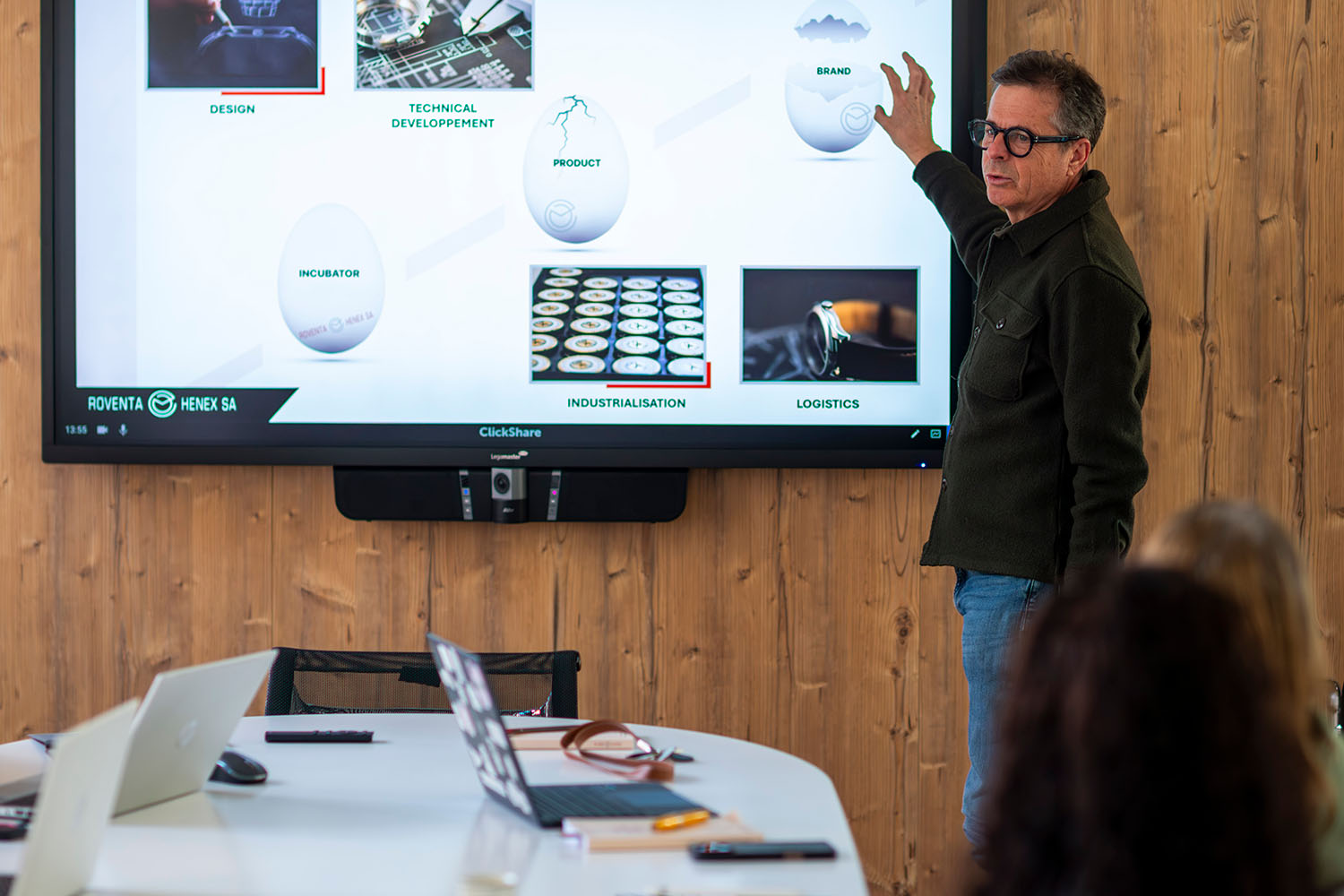
In every phase of a watch project, there are moments when internal know-how reaches its limits – not out of inability, but because industry specifics require a years-long learning curve. External support is not an admission of weakness, but an efficient decision: you buy experience that you could not build internally without sacrificing several projects.
Concept
In the early phase, external expertise helps to sharpen requirements in line with the market, to realistically assess feasibility, and to make costly design decisions with foresight – before they are fixed.
Development
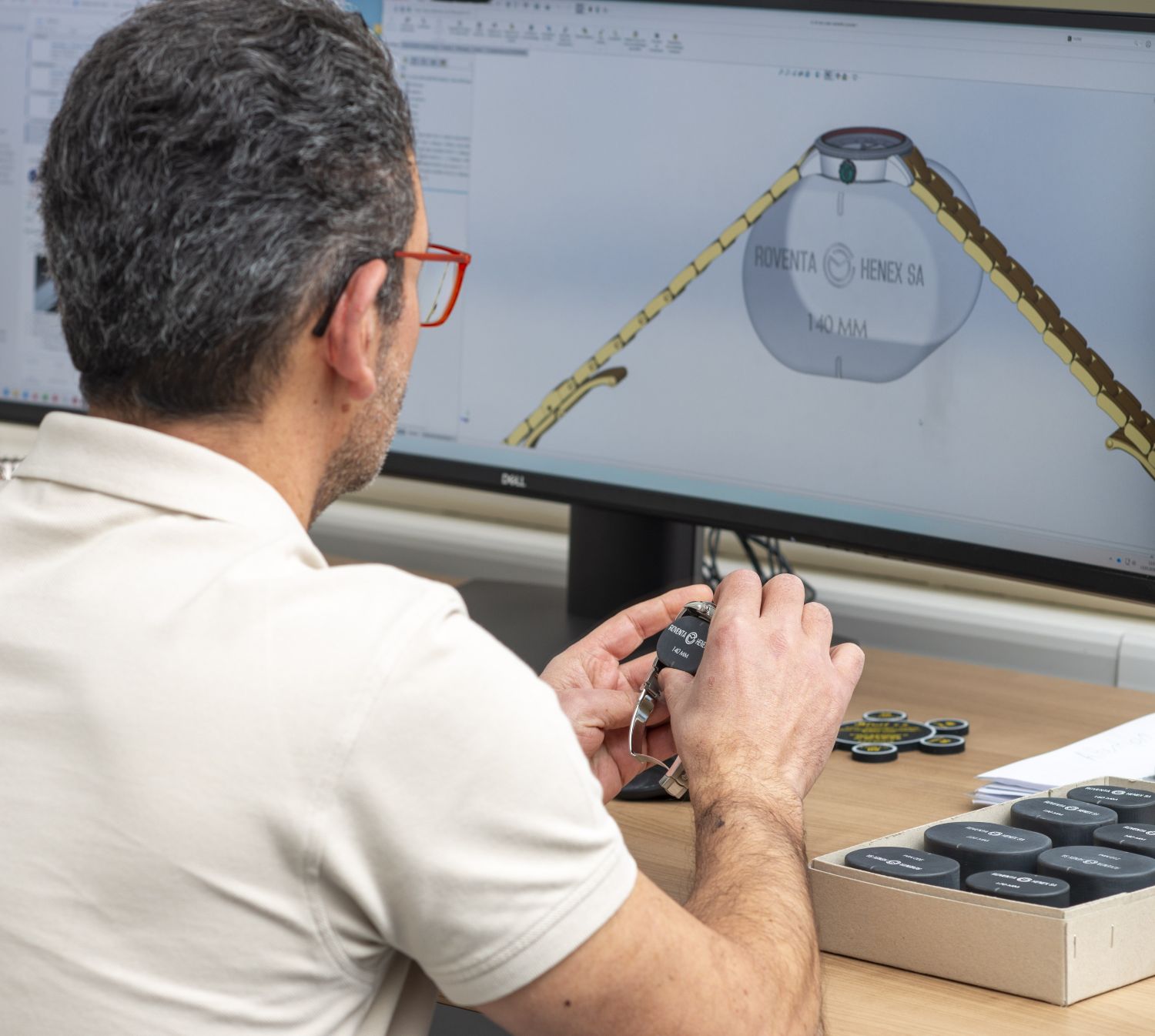
Between the first sample and series maturity lie iterations, supplier discussions, quality acceptances, and documentation. Whoever accompanies this phase ensures that the sample is not the end point, but the starting point of quality assurance.
Scaling
Series production is process management: suppliers, timing, quality control, proofs, market requirements. External support creates transparency and prevents problems from becoming visible only to the customer.
After-Sales
Service and maintenance capability must be considered on the product side. A well-thought-out service concept protects the brand in the long term and creates customer loyalty that extends beyond the purchase.
Five reasons that are relevant to you
- Industry-rooted, not industry-blind. Roventa Henex thinks and acts from a deep knowledge of the watch industry – with resilient networks to suppliers, manufacturers, and partners that you do not have to build first.
- Planning security from the start. You receive realistic timelines, transparent risk assessments, and clear decision-making bases – not after the first sample, but before it is created.
- Brand conformity as a constant. Every decision – material, complexity, variant, supplier – is evaluated against the standard of your brand. The product that is delivered carries your brand message. Not just any.
- Controllability for the management level. Boards and administrative boards receive the foundations they need: transparency about risks, cash flow relevance, and governance parameters – without having to delve into operational details.
- Scalable and future-oriented. A well-set-up first project creates the infrastructure for follow-up products, variants, and market expansion. What is built smart today will pay returns tomorrow.